
Support between sessions
After a meeting with a professional, a person returns to everyday life. It is at home, at work or at school that they then look for how to use what they talked about together.
Orbiso is created for this time between sessions. In psychotherapy and mental health support, it is meant to help maintain continuity between sessions. In preventive and educational care, it makes it possible to return to recommendations and information from the consulting room at the moment the patient needs them.
A digital programme can offer a short explanation, a reminder of an important idea, space for reflection or a step to try. The author chooses what kind of support fits the situation. The person does not have to record the whole course of the week or complete another series of tasks.
In the design, we care that the person can use the offer according to their needs, without pressure and without guilt about what they did not do.
The programme is meant to complement the relationship with the professional in the time between sessions. It does not replace care itself or the therapeutic relationship.

What a digital programme is
On the Orbiso platform, a professional or an expert team creates a programme for their clients or patients. Further in the text I use the term author. The author prepares the programme in a web environment on a computer and is responsible for its content. Preparing a programme does not require knowing how to programme. People then use the finished programme in the Orbiso mobile app.
The programme consists of short parts that a person goes through on their phone. It may include:
- a clear explanation of a topic,
- questions for reflection,
- short exercises,
- practical steps that can be tried in everyday life.
The content is at hand and people go through it at their own pace, for example at home or before the next session. How differently such a programme can look is shown by three examples:
OncoSafe
Masarykův onkologický ústav
The programme helps women with a BRCA mutation find their way through the information, examinations and decisions that may await them. It includes an explanation of heredity, psychological support, information on regular monitoring, preparation for examinations and care after preventive surgery. It thus connects professional information with practical preparation for demanding situations.
Podpůrný rozhovor s dítětem
Nevypusť duši
The programme teaches adults to notice warning signs, open a sensitive topic, listen and together with the child look for the next step. Short explanations are complemented by model stories, reflection and practice of specific phrases that adults can use in conversation.

DigiWell
Národní ústav duševního zdraví (NÚDZ)
DigiWell focuses on mental wellbeing and is based on goal-setting theory. It works with smaller, concrete steps that a person tries in an ordinary day. It has seven thematic weeks: five topics are shared, two are assigned according to the intake answers. The next week opens after seven days regardless of the number of completed steps. The programme reminds people that even one completed step is a valid experience.
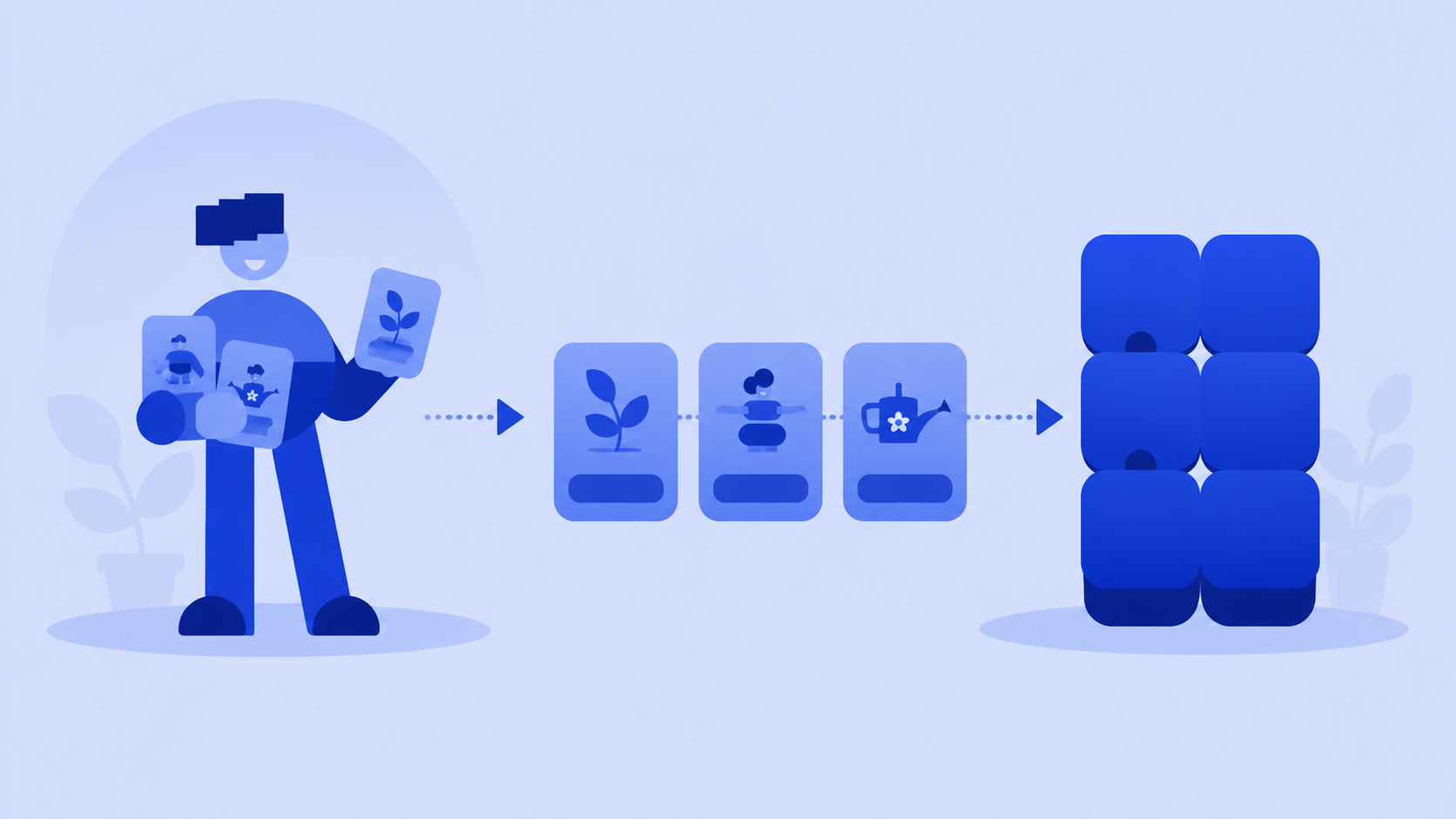
All three programmes are made of modules and blocks. A module is a thematic part similar to a chapter, for example “When I can prepare”. A block is a short explanation, a reflection question, audio or an exercise inside a module. The author determines the content and order of these parts.
Translating your own practice into modules and blocks means deciding what belongs in the programme, how the parts will connect and what you can prepare. Wizard helps with these decisions.
Is it for you?
Most of the authors we spoke with while preparing Orbiso had not yet created a digital programme. How you start, however, may differ depending on what you already have prepared and how you work.
When you are just starting
You have experience from practice and know what you want to pass on, but you do not yet have an outline or written materials. Wizard helps you prepare a first structure and think through how people will go through it. It is especially useful for educational and preventive programmes, work materials and procedures divided into several steps.
When you already have finished content
With a finished outline you can start directly in the editor and assemble modules and blocks according to it. Wizard is useful when you want to think the structure through first.
When you work more by process than by structure
Some therapeutic approaches rest more on the relationship and the course of the session itself and less on pre-structured steps or tasks between sessions.
Digital support can also serve as a complement in such work: offer an explanation, a prompt for reflection or preparation for the next conversation. The author chooses what makes sense to carry outside the session itself.

How Orbiso Wizard works
In Wizard, the author gradually describes the programme's intent, the people it is created for, and the options for preparing it. From the answers, AI proposes goals and structure. The author continuously assesses the proposals. At the end they have an outline of modules and blocks with a working brief. The flow looks like this:
-
Working with your own materials
The author can upload a methodology, an article or their own notes. Wizard draws on the materials when refining the brief and in further proposals. You can continue even without your own materials.
-
Problem, context and intent
The author describes what the programme should help with, who it is for and in what situations people will use it. They add what change it should support. Wizard asks about ambiguities and contradictions. The refined brief then informs the next steps.
-
People profiles and their barriers
Wizard proposes working profiles of people from the target group and possible barriers, for example concerns, missing skills or conditions in the environment. The author can revise, add to or reject the profiles and check the barriers assigned to each of them. Profiles describe typical situations; they are not a diagnosis or a record of a specific client.
-
Programme goals
Wizard proposes goals, arranges their sequence and distinguishes a smaller shift from a longer-term change. A goal can be a concrete action, but also better understanding or greater calm in a demanding situation.
-
Modes of help
The author goes through nine modes of help: education, planning, practice, self-monitoring, feedback, motivation, relapse prevention, social support and working with emotions. For each they decide whether to exclude it, leave the choice to AI, or require it in the programme. In this step they decide on the purpose of the support. Content and format come later. The professional foundations are described below in the section What happens under the surface.
-
Format and the author's capacity
Wizard recommends the format of individual parts, for example text, audio, video or an interactive exercise. The author adds what they can prepare. If they do not have capacity for video, Wizard looks for another form for the same purpose. The author is still defining the options for preparation. Concrete content is finished later.
-
Scope and rhythm of the programme
The author sets the length of the programme, the time demand of one part and how often content is opened. They add rules for the proposal: what must always be in the programme and what should be avoided.
-
Structure proposal and working brief
Wizard assembles a tree of modules and blocks. It attaches a working brief with an overview of the decisions the proposal is based on. A working version of the programme is created, whose content the author continues to revise in the editor.
What happens under the surface
How does a concrete block emerge from the author's answers? In designing Wizard we connect five levels: mode of help, active component, professional foundation, mechanism of use, and format with dose. The links between them are prepared in advance and draw on multiple professional approaches. AI uses them when proposing according to the author's brief.
-
Layer 1
Mode of help
Determines what the block is meant to serve. The catalogue distinguishes nine functions (ZP01–ZP09): education, planning, practice, self-monitoring, feedback, motivation, relapse prevention, social support and working with emotions. Individual modes of help have different professional foundations.
-
Layer 2
Active component
Describes the component of support through which the programme is meant to contribute to change. The catalogue contains twenty-five active components (AS01–AS25), for example psychoeducation, goal setting, working with barriers, skill practice, strengthening autonomy, supporting self-efficacy, working with values, cognitive change or response modulation. Where it matches their content, they are linked to specific codes of the BCTTv1 taxonomy.
-
Layer 3
Professional foundation
Theories, models, taxonomies and therapeutic approaches on which the design of components and their use rests: Behaviour Change Wheel and the BCTTv1 taxonomy, self-determination theory (Deci & Ryan), self-efficacy (Bandura), motivational interviewing (Miller & Rollnick), ACT (Hayes), relapse prevention (Marlatt & Gordon), buffering hypothesis (Cohen & Wills), safety planning (Stanley–Brown) and the process model of emotion regulation (Gross).
-
Layer 4
Mechanism of use
Describes the assumed mechanism of effect of the block. It distinguishes, for example, working with understanding and with one's own experience.
-
Layer 5
Format and dose
Determines the form of the activity, its length, frequency and estimated load. The format can be text, video, animation, audio, an infographic, a quiz, narration, an interactive exercise, a task, a diary, a habit tracker, a checklist, a chart or a chat with a professional. Scope follows the constraints the author set in step 6.
For each block Wizard preserves the reason for the proposal, the link to the profile, the need it addresses, and the goal. In this example the rationale might read: “I propose tracking bodily signals because this profile recognises overload late. The record is meant to help notice its first manifestations.” When revising, the author can thus return to why the block has its place in the programme.
How parts of the programme connect
For many changes, information alone is not enough. Someone needs to try a concrete step; someone else needs to orient themselves first, gain confidence or support. That is reflected in the choice of activities and their order.
Wizard therefore checks the continuity of parts, their relation to goals and barriers, and the overall scope of the programme. AI works with a prepared catalogue and its links and looks for options that match the author's brief and materials.
The author does not need to know all the catalogues and frameworks the proposal draws on. They do need to understand their field and assess whether the proposed parts are suitable for the given group and situation. Professional judgement and the final decision on content remain with them.
What we are preparing next
We are also preparing a professional article in which we will describe Wizard's methodology in more detail: how it works with behaviour change, learning and the design of digital programmes.
If you are interested in trying Wizard or in further materials on the methodology, you can leave us your e-mail. We will let you know when they are available.